
Life is rarely a straight line. Ideally, we would all go through our days without ever needing to set foot inside a courtroom or decode a dense legal contract. For many minor disputes—a parking ticket, a small consumer complaint, or a straightforward subscription cancellation—handling matters personally is perfectly feasible. In these instances, common sense and a bit of patience are usually sufficient to resolve the issue.
However, the modern judicial system is vast, intricate, and often unforgiving to the uninitiated. There are specific milestones and crises where the stakes are simply too high to gamble on a “do-it-yourself” approach. Whether it involves your freedom, your family, your citizenship, or your financial future, a single procedural error or missed deadline can have cascading effects that last for decades.
The legal system is designed to be adversarial. When you enter a legal dispute, the opposing side—be it a prosecutor, an insurance company, or a corporate entity—will almost certainly have professional representation. Attempting to navigate these waters alone places you at a distinct disadvantage. This guide explores the ten most critical life events where securing professional counsel is not merely a luxury but a necessity for protecting your rights and securing your future.

1. Navigating the Dissolution of a Marriage
Ending a marriage is one of the most emotionally draining experiences a person can go through. Beyond the emotional toll, it is fundamentally a dissolution of a legal and financial partnership. When two lives have been entwined for years, untangling them requires a precise understanding of state laws regarding property, debt, and family obligations. While some couples attempt to separate amicably without counsel, this often leads to agreements that are legally unenforceable or grossly unfair to one party.
The division of assets is rarely as simple as splitting a bank account down the middle. Real estate equity, retirement accounts (401ks and pensions), business interests, and accumulated debts must be identified and valued. If one spouse has been the primary earner while the other managed the household, the complexities of spousal support (alimony) come into play. Without professional guidance, you might unknowingly waive your right to assets you are entitled to or agree to debt that isn’t yours.
Key areas where professional oversight is essential include:
- Child Custody and Support: Determining physical and legal custody requires a focus on the “best interests of the child.” A legal professional helps structure parenting plans that are realistic and enforceable, ensuring that support calculations accurately reflect income and needs.
- Hidden Assets: In contentious separations, one partner may attempt to hide money or undervalue assets. A skilled legal team has the resources to perform forensic accounting to ensure full financial disclosure.
- Equitable Distribution: Most states do not simply split assets 50/50. They look for an “equitable” or fair division, which involves complex arguments about contribution and future earning potential.
During this volatile time, emotions can easily cloud judgment. You might be tempted to give up too much just to “get it over with,” or conversely, fight over trivial items out of spite. A divorce attorney acts as a crucial objective buffer, helping you make rational decisions based on long-term well-being rather than temporary emotional states. They ensure the final decree is ironclad, preventing future legal battles.
2. Facing Criminal Accusations and Charges
The moment handcuffs are placed on your wrists, the clock starts ticking on your defense. The criminal justice system is a powerful machine with vast resources dedicated to securing convictions. From the initial police interrogation to the arraignment and potential trial, every step is a potential minefield for the accused. One of the most dangerous misconceptions is that if you are innocent, you just need to explain your side of the story to the police. In reality, anything you say can be used to build a case against you, regardless of your intent.
Understanding the nuance of the charges against you is the first hurdle. Prosecutors often “stack” charges, adding multiple offenses to increase leverage during plea negotiations. An average citizen cannot effectively evaluate whether a plea deal is fair or if the evidence against them is circumstantial and weak.
Immediate actions a legal professional will take:
- Protecting Constitutional Rights: They ensure that law enforcement did not violate your Fourth Amendment rights against unreasonable search and seizure, or your Fifth Amendment right against self-incrimination.
- Evidence Analysis: They review police reports, body camera footage, and witness statements to find inconsistencies or procedural errors that could lead to case dismissal.
- Negotiation: The vast majority of cases are resolved before trial. A professional knows the local judges and prosecutors and can negotiate for reduced charges or alternative sentencing programs.
The consequences of a conviction extend far beyond jail time. A permanent criminal record can bar you from employment, housing, and educational loans. Because the prosecution is aggressive and well-funded, hiring experienced criminal attorneys is the only way to level the playing field. They serve as your voice and your shield, ensuring that the government is held to its burden of proof.

3. Recovering from Auto and Traffic Accidents
After a serious car accident, your focus should be on physical recovery. However, the financial reality of medical bills, vehicle repairs, and lost wages forces victims to deal with insurance companies almost immediately. It is important to remember that insurance adjusters, despite their friendly demeanor, work for a for-profit corporation. Their primary goal is to minimize the payout on every claim. They are trained to extract statements from you that can be used to shift liability or downplay the severity of your injuries.
Many victims accept the first settlement offer because they are desperate to pay immediate bills. These offers rarely account for the full scope of the damage. For example, a “whiplash” injury might seem minor initially but can lead to chronic pain requiring years of physical therapy. If you sign a release for a low settlement, you cannot go back and ask for more money later when complications arise.
A legal advocate helps you secure compensation for:
- Future Medical Care: Estimating the cost of surgeries, rehabilitation, or medication that may be needed years down the line.
- Lost Earning Capacity: If your injury prevents you from returning to your previous job or advancing in your career.
- Pain and Suffering: Non-economic damages that compensate for the emotional trauma and loss of enjoyment of life.
- Property Diminution: recovering not just the repair cost, but the lost resale value of your vehicle.
Determining fault in multi-vehicle accidents or accidents involving commercial trucks is highly technical. It may involve accident reconstruction experts and subpoenaing cell phone records. While you focus on healing, personal injury lawyers handle the aggressive negotiation with the insurance carriers, ensuring that you are not bullied into accepting less than you deserve.
4. Securing U.S. Citizenship
The path to United States citizenship is one of the most rigorous administrative processes in the world. For permanent residents holding a Green Card, applying for naturalization (Form N-400) is the final step in their immigration journey. However, the U.S. Citizenship and Immigration Services (USCIS) operates with strict scrutiny. A simple clerical error, a misunderstood question on the form, or a discrepancy in your travel history can lead to months of delays or an outright denial.
Eligibility for naturalization involves more than just holding a Green Card for five years. Applicants must prove continuous residence, physical presence, and “good moral character.” The definition of good moral character can be subjective and is often where applicants face unexpected hurdles. Past issues that seemed minor—such as failure to pay taxes on time or a decade-old petty theft charge—can resurface to jeopardize the application.
Common pitfalls that require professional attention:
- Travel History Discrepancies: If you have spent significant time outside the U.S., you must prove you did not abandon your residency.
- Criminal History: Even expunged records must be disclosed to immigration authorities. A professional can analyze whether a past incident makes you deportable or ineligible for citizenship.
- The Interview Process: The citizenship interview involves a civics test and an English proficiency test. A lawyer can prepare you for the specific types of questions officers ask and can even attend the interview with you.
Immigration laws and policies are subject to frequent changes based on the current administration. Navigating this shifting landscape requires someone who stays current with every new regulation. A naturalization attorney ensures your petition is flawless before it is submitted, drastically reducing the risk of rejection and providing peace of mind during a high-stakes process.
5. Dealing with Workplace Injuries
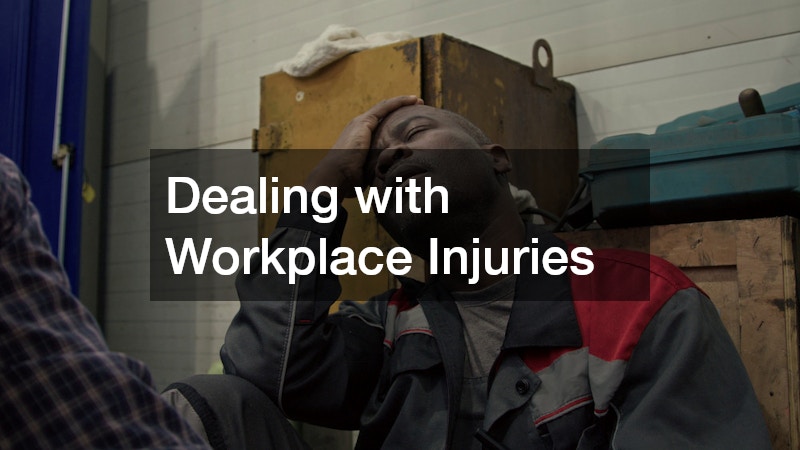
We expect our workplaces to be safe environments, but accidents happen in every industry, from construction sites to corporate offices. The workers’ compensation system was designed to provide a safety net for injured employees, offering coverage for medical bills and a portion of lost wages without the need to prove the employer was at fault. However, the system is bureaucratic and often adversarial. Employers and their insurers frequently deny claims to keep premiums low, arguing that the injury happened outside of work or was a pre-existing condition.
Navigating a workers’ compensation claim while in pain is difficult. There are strict deadlines for reporting the injury and filing the claim. Missing these deadlines can result in a total forfeiture of benefits. Furthermore, the doctor assigned by the insurance company may be biased, aiming to return you to work before you are physically ready.
Critical reasons to seek legal help include:
- Claim Denials: If your employer disputes that the accident occurred, you will need to present evidence, witness testimony, and medical records at a hearing.
- Permanent Disability: If you cannot return to work fully, calculating the correct impairment rating and settlement amount is complex.
- Retaliation: It is illegal for an employer to fire or demote you for filing a claim, yet it happens frequently. A lawyer protects your job security while you recover.
- Third-Party Claims: If your injury was caused by a defective machine or a delivery driver (someone other than your employer), you might have a separate personal injury claim.
When an employer pushes back, work injury attorneys can step in to gather the necessary medical evidence to substantiate your claim. They ensure that your settlement covers not just today’s bills, but the long-term rehabilitation you may require.
6. Ensuring Safety in Volatile Relationships
Domestic abuse is a harrowing reality that affects people of all backgrounds. It is not limited to physical violence; it encompasses emotional manipulation, financial control, and stalking. Breaking free from an abusive partner is statistically the most dangerous time for a victim. The legal system provides tools to protect victims, but accessing them quickly and correctly is vital for safety.
The primary legal tool in these situations is a Restraining Order or Protection from Abuse (PFA) order. These orders mandate that the abuser stay away from the victim, their home, and their workplace. However, obtaining a permanent order requires a hearing where the victim must testify and present evidence of the abuse. Facing an abuser in court is terrifying, and the abuser may have their own counsel trying to discredit the victim’s story.
How legal counsel provides a safety net:
- Emergency Orders: A lawyer can help you file for an immediate, temporary restraining order (TRO) often without the abuser being present (ex parte), providing immediate protection until a full hearing.
- Custody and Support: Abuse complicates child custody. A lawyer advocates for supervised visitation or no contact to ensure the children’s safety and petitions for emergency spousal support so the victim is not financially stranded.
- Housing Rights: Legal counsel can help you remain in the family home while the abuser is forced to leave, or help you break a lease without penalty to flee to safety.
Navigating the court system while traumatized is overwhelming. A domestic violence attorney acts as a barrier between you and the abuser, handling all communications and ensuring that the court understands the severity of the situation so that the protective measures granted are robust and enforceable.

7. Hiring International Talent or Relocating for Work
In a globalized economy, businesses often need to look beyond their borders to find the specific talent required to innovate and grow. Similarly, entrepreneurs and investors frequently seek to move their operations to the United States to access its vast market. However, the U.S. business immigration system is notoriously complex, filled with varied visa categories, caps, and rigorous compliance standards.
For a company, a denied visa isn’t just a bureaucratic annoyance; it represents a loss of critical time, money, and potentially the loss of a key employee to a competitor. Whether it is an H-1B for a specialized worker, an L-1 for an intracompany transferee, or an E-2 for an investor, each category has specific evidentiary requirements regarding the employee’s qualifications and the company’s financial health.
Strategic advantages of professional guidance:
- Selecting the Right Visa: There are often multiple options for bringing a worker to the U.S. A professional helps determine which visa offers the highest probability of success and the best long-term path to permanent residency (Green Card).
- Department of Labor Compliance: Many employment visas require Labor Condition Applications (LCA) to prove that hiring a foreign worker won’t negatively impact U.S. wages. Errors here can lead to audits and fines.
- Consular Processing: Even after a petition is approved in the U.S., the employee must often interview at a consulate abroad. Preparation for this interview is crucial.
The scrutiny on employment-based immigration has intensified. A boilerplate application is no longer sufficient. A business visa attorney drafts custom petitions that clearly articulate the specialized nature of the role and the qualifications of the candidate, ensuring the company remains compliant while securing the talent it needs.
8. Fighting Severe Felony Allegations
While all criminal charges are serious, felonies carry consequences that effectively end life as you know it. We are talking about potential years or decades in state or federal prison, the loss of voting rights, and the inability to own a firearm. Cases involving serious allegations—such as drug trafficking, white-collar fraud, or violent crimes—involve complex investigations and highly technical rules of evidence.
In felony cases, the “discovery” (the evidence the prosecution holds) can be thousands of pages long. It may include DNA evidence, ballistics reports, wiretap recordings, and forensic accounting data. Interpreting this data requires a legal team with specialized knowledge and access to independent expert witnesses who can challenge the state’s findings.
The strategic role of counsel in high-stakes trials:
- Pre-Trial Motions: A skilled lawyer will file motions to suppress evidence that was obtained illegally. If the key evidence is thrown out, the case may be dismissed before it ever reaches a jury.
- Jury Selection (Voir Dire): Selecting a jury is an art form. The defense must identify and remove jurors who hold inherent biases against the defendant to ensure a fair trial.
- Creating Reasonable Doubt: The defense does not need to prove innocence; they must only prove that the state’s case has holes. This involves cross-examining witnesses to reveal inconsistencies and presenting alternative theories of the crime.
When your freedom is on the line, you cannot rely on a general practitioner who mostly handles traffic tickets. You need specialized defense attorneys who are experienced in courtroom litigation and understand the specific strategies needed to dismantle a felony prosecution case piece by piece.

9. Seeking Specific Damages for Negligence
Not all injuries occur in cars or at work. “Premises liability” refers to accidents that happen on someone else’s property due to unsafe conditions. The most common example is a “slip and fall,” but this category also includes dog bites, swimming pool accidents, and negligent security at public venues. These cases are notoriously difficult to win because the burden of proof rests entirely on the injured party.
To win a premises liability case, you must prove that the property owner knew (or should have known) about the hazard and failed to fix it. This requires swift investigation. Security camera footage is often overwritten within days, and physical hazards like a broken step or an icy walkway are quickly repaired or melt away. Without immediate preservation of evidence, your case may disappear.
Key complexities in negligence claims:
- Comparative Negligence: The defense will almost always argue that you were partially at fault—that you weren’t watching where you were going or were distracted by your phone. In many states, if you are found partially at fault, your compensation is reduced or eliminated.
- Calculating Damages: Beyond medical bills, serious falls can lead to orthopedic injuries that require lifelong management.
- Identifying the Defendant: In commercial properties, it can be difficult to determine who is liable—the tenant, the property management company, or the building owner.
Generic legal advice is insufficient for these nuanced arguments. A dedicated personal injury attorney understands the specific medical and forensic evidence required to establish negligence. They know how to depose store managers and review maintenance logs to prove a pattern of neglect, ensuring the property owner is held accountable.
10. Clearing Your Record for a Fresh Start
People make mistakes. However, in the digital age, a mistake from your past can follow you forever. A criminal record is easily accessible to anyone with an internet connection, including potential employers, landlords, and loan officers. Millions of people find themselves denied opportunities because of an arrest that happened years ago, even if the charges were eventually dropped or if they have lived a blameless life since the conviction.
The legal process of “cleaning” a record is known as expungement or record sealing. Expungement generally destroys the record, treating it as if it never existed, while sealing hides it from the public but keeps it accessible to law enforcement. This is not an automatic process; it requires a proactive petition to the court.
Why professional assistance is critical for success:
- Eligibility Analysis: Not all crimes can be expunged. Eligibility depends on the severity of the offense, the time that has passed, and your subsequent behavior. Applying for an ineligible expungement is a waste of filing fees.
- Drafting the Petition: The petition must be precise. Errors in dates, case numbers, or personal information can lead to immediate rejection.
- The Hearing: In some cases, the District Attorney may object to the expungement. You may need to argue before a judge why you deserve a clean slate.
This is a highly technical area of law. An expungement lawyer can navigate the specific statutes of your state to ensure the motion is filed correctly. They help you present the best possible argument for your rehabilitation, maximizing your chances of finally closing the door on the past and unlocking a future free from the stigma of a criminal record.
Conclusion
The legal system is a powerful force that can alter the trajectory of your life in an instant. While the cost of hiring a lawyer is often a concern, the cost of losing a case—whether it be financial ruin, loss of child custody, deportation, or incarceration—is exponentially higher. The laws are written in a way that presumes those involved understand the rules of the game. When you enter that arena without representation, you are playing against experts with a handicap.
If you are facing any of the life events outlined above, the most important step you can take is to be proactive rather than reactive. Do not wait until you have signed a settlement or missed a court date to seek help. Assess your situation, research your options, and reach out to a qualified professional. Having a skilled advocate in your corner is the best way to ensure that your voice is heard, your rights are protected, and your future is secure.